Nearly six million properties across the U.S. have a substantial risk of flooding that isn’t disclosed by federal flood maps, according to a nonprofit research firm that released its own U.S. flood maps Monday.
The maps from nonprofit First Street Foundation highlight the widespread nature of flood risk. Flooding caused about $17 billion in property damage a year from 2010 to 2018, according to the Association of State Floodplain Managers.
Homeowners, developers and city planners have long used the Federal Emergency Management Agency’s flood maps, which outline flood zones. FEMA’s maps label which properties have at least a 1% annual risk of flooding, also called a 100-year flood zone.
The First Street analysis suggests that millions of American homeowners could be more vulnerable to flooding than they realize, and many may lack the resources to rebuild their homes in the event of severe flood damage. Mortgage lenders typically require buyers of homes in a 100-year flood zone to purchase flood insurance.
FEMA classifies 8.7 million properties as having a 1% annual flood risk, according to First Street, while First Street’s maps put 14.6 million properties into that category, or about 10.3% of all properties in the contiguous U.S.
The organization, which advocates for providing homeowners with more information about flooding and climate change, said its maps show more properties with 1% flood risk than the FEMA maps because it includes parts of the country that FEMA hasn’t mapped, uses current climate data and incorporates rainfall-related flooding.
Homes were flooded in Nashville in 2010 after heavy rains.
Rusty Russell/Getty Images
FEMA said in a statement that its maps are intended for floodplain-management and emergency-response decisions. “The FEMA Flood Insurance Risk Maps and First Street Foundation maps do not conflict with each other, rather they complement one another by depicting different types of risk,” FEMA said. “Users should explore the differences between the maps to build a more comprehensive understanding of flood risk.”
First Street is making its flood-risk data, including a 1-to-10 score for each property in the contiguous U.S., available free to consumers. Its data also includes projections for how each property’s flood risk might change in the next 30 years, based on climate models.
Some of the biggest gaps between the First Street and FEMA maps are in inland states. In Utah, Montana and Wyoming, First Street said it identified more than four times as many properties with 1% annual flood risk than FEMA’s maps show. In highly flood-prone states such as Florida and Texas, the relative gaps are much smaller.
In Louisiana, Arizona and New Jersey, First Street said it identified fewer properties with 1% flood risk than FEMA’s maps.
First Street also projected that by 2050, the total number of contiguous U.S. properties with a 1% annual flooding risk will increase to 16.2 million, or 11.4% of total properties.
Many counties in the U.S. aren’t mapped by FEMA, and in about 3,300 communities, the maps are more than 15 years old, said Michael Grimm, FEMA’s assistant administrator for risk management for the Federal Insurance and Mitigation Administration, in testimony at a February congressional hearing. FEMA’s maps also don’t reflect projected future sea-level rise or expectations for increased rainfall in some areas due to climate change.
“FEMA’s maps are a snapshot in time, and some of those snapshots fade in time,” said Roy Wright, chief executive of the Insurance Institute for Business & Home Safety and the former chief executive of the National Flood Insurance Program.
In the past three years, more than 40% of flood claims have been for properties that are unmapped by FEMA or outside FEMA’s 1% annual risk zones, according to Mr. Grimm’s testimony.
“We have a lot more flood risk in the country than we currently understand,” said Chad Berginnis, executive director of the Association of State Floodplain Managers.
Still, Mr. Berginnis cautioned that the thousands of local floodplain managers around the country hadn’t seen First Street’s maps and might disagree with the methodology. “The ground-truthing of this is going to become very important,” he said.
Scott Kozicki’s house in the Bellevue neighborhood of Nashville, Tenn., didn’t have flood insurance when it was destroyed by the city’s catastrophic flooding in May 2010. It took him years to rebuild. He now has flood insurance on the property, even though it isn’t required.
“The flood was the most devastating thing I’ve ever seen,” he said.
In Tennessee, First Street identified about 383,000 properties with at least a 1% annual flood risk, while FEMA puts about 101,000 properties in that category, according to First Street. In Davidson County, where Nashville is located, First Street said 10% of the properties have at least a 1% annual flood risk, compared with about 3% on the FEMA maps.
The Nashville area’s FEMA flood maps were redone in 2017, and parts of them were updated again this year, said Roger Lindsey, practice leader for stormwater and floodplain management for the Metropolitan Government of Nashville and Davidson County. He said he didn’t know what methodology First Street used, but “our city would be hard-pressed to be more up-to-date than we are at this point.”
Still, Mr. Lindsey said he thinks it is helpful to give homeowners more information about flood risk.
“I hear people all the time say, ‘I’m not in the flood plain so I don’t need flood insurance,’” he said. He advises people outside the 1% risk zone to purchase flood insurance “if you’re close enough to see the creek in the distance or the river in the distance.”
The numbers: After two consecutive months of decline, the index of pending home sales soared 44.3% in May as compared with April, the National Association of Realtors reported Monday.
The monthly increase was the largest ever since the National Association of Realtors started the index in January 2001. “This has been a spectacular recovery for contract signings, and goes to show the resiliency of American consumers and their evergreen desire for homeownership,” Lawrence Yun, chief economist for the National Association of Realtors, said in the report. “This bounce back also speaks to how the housing sector could lead the way for a broader economic recovery.”
The index measures real-estate transactions for previously-owned homes where a contract was signed but the sale had not yet closed, benchmarked to contract-signing activity in 2001.
Compared with a year ago, contract signings were still down 5.1%, a sign of how steep the declines in March and April were given the record monthly increase in May.
What happened: Every region saw a monthly increase in pending home sales, led by the West (up 56%) and the Northeast (up 44%). Only the South saw a year-over-year uptick in contract signings.
With the improved outlook on home sales, Yun said the National Association of Realtors now expects existing-home sales to reach 4.93 million this year and new home sales to reach 690,000.
The big picture: The rebound in pending home sales means that there likely won’t be repeats of May’s significant downturn in existing-home sales for months to come.
Together with last week’s new home sales report for May, which also measures contract signings, it appears that home buyers are eager to re-enter the housing market. As such, the typically busy spring home-buying seasons appears to have been delayed for most buyers rather than foregone outright.
Research has shown that the job losses related to the coronavirus pandemic have largely occurred for lower-paid workers who are less likely to be home buyers, so the people looking to purchase a home have weathered the recession well to this point. And record-low mortgage rates are proving to be a major incentive.
Still, buyers will face trouble finding homes to buy. Sellers are still somewhat reluctant to list their homes because of concerns about the coronavirus and the economy. Before the pandemic began, the U.S. already saw a very short supply of homes for sale. For buyers in today’s market, that means they can expect more competition and higher prices for the properties that are available.
What they’re saying: “New home sales took a similar upward turn last week, but today’s pending data is a more important indicator of market activity since it covers existing homes which made up roughly 80 to 90 percent of sales in recent years. This move confirms that May closings could represent a low-point for home sales, with June and July numbers looking much better,” said Danielle Hale, chief economist at Realtor.com.
Market reaction: The Dow Jones Industrial Average and the S&P 500 were both up slightly in Monday morning trading on the heels of the housing data, despite a continued rise in COVID-19 cases.
Will Arnett, the star of “BoJack Horseman,” is galloping away from his custom Beverly Hills home, Variety reported. The prefab hybrid is available for $10,995,000.
The actor purchased the property for $2.86 million in 2015, according to realtor.com®. The design-savvy star then tapped the architect Suchi Reddy, who collaborated with the prefab company Living Homes to build a new residence for him.
The result, a glass-and-steel-frame modern marvel, landed on the cover of Dwell magazine. Although partly prefab, it’s not exactly a kit house. About a third of the home was built on site, according to the Dwell feature, including the glass staircase tower and a guest wing, which houses Arnett’s recording studio.
The story notes that even the prefab section, which consists of six modules in the main house, was “heavily customized.”
Will Arnett’s home in Beverly Hills
realtor.com
Entry
realtor.com
Living room
realtor.com
Open kitchen
realtor.com
Dining area with built-in seating
realtor.com
Master suite with private terrace
realtor.com
Patio
realtor.com
Backyard with pool
realtor.com
Completed in 2017, the 4,000-square-foot layout includes five bedrooms and 4.5 baths.
The light and airy entry opens to a living area with floor-to-ceiling windows. The open kitchen with built-in seating adjoins the dining area.
An office converts to a guest room with a pull-down Murphy bed. The master suite is on the top floor and opens out to a private deck.
The gated grounds, which boast an infinity pool and spa, are surrounded by dense treetops. The outdoor living space has a barbecue station, a fireplace, and areas for lounging and dining.
Arnett has traded real estate before. In 2017, he sold his share of two West Village condos in New York City to his ex-wife, Amy Poehler, who bought him out of the units for $6.49 million after the couple split up. The two contiguous units had apparently been combined into one residence, Mansion Global reported.
Arnett may be best known for his role as Gob Bluth in the series “Arrested Development.” He’s also appeared in movies such as “Blades of Glory” and “Hot Rod.” The native Canadian’s deep baritone can be heard voicing such characters as Batman in “The Lego Movie” franchise.
Richard Ehrlich with Westside Estate Agency holds the listing.
Ah, Florida: warm weather, beaches, and no state income tax. No wonder it’s a favored destination for older Americans eyeing the golden expanse of work-free years ahead of them. And now that the coronavirus pandemic makes it unwise to socialize except at a distance, it’s more important than ever to be able to settle into a forever home where you’re free to enjoy the fresh air, long walks on the beach, and the soothing sound of crashing waves.
There are currently more than 74 million boomers—of which 10,000 per day are hitting age 65, according to the Pew Research Center. And as they shift into retirement mode, many are migrating toward the beach. According to United Van Lines National Movers Study, in 2018, 39% of the retirees they moved had their GPS systems locked on to Florida. Shocker, right?
In fact, the Sunshine State’s shorelines aren’t the only coastal ZIP codes attracting boomers—plenty of folks don’t want to live in what feels like a steam room six months out of the year, or they may want to be closer to friends and family elsewhere in the country. Instead, the 55-plus crowd has been seeking out budget-conscious, beach alternatives with plenty of outdoor activities and (often) a temperate climate in which to settle down for good.
“Retirees are undoubtedly drawn to these areas by the active, beach lifestyle,” says Danielle Hale, chief economist for realtor.com®. “And the relative affordability of homes in these towns means more of a fixed income is left over for fun, which probably makes the case for sticking around.”
From the peaceful dunes of Cape Cod and the warm waters of the Gulf of Mexico to the wild cliffs of the Pacific Northwest, these are the top 10 affordable beach towns and cities across the United States where retirees can kick back. And it turns out, they share some common features that are particularly attractive for folks who are no longer congregating by the water cooler.
“Retirees look for affordable communities where they can fill their time with purposeful activities and social connections, keys to a long, healthy life,” says Hale.
Infographic
Tony Frenzel / realtor.com
To come up with this list, our data experts looked at more than 1,300 towns on the water, pulled off the places that are located on lakes or rivers—this list is all about tasting the salt in the ocean breeze—and cut the selections to one place per state, for a wider variety of options. The ranking was based on the population of residents aged 55 and over per capita (the higher the better, we say), affordability based on median list price, access to hospitals and other health care facilities, the number of amenities like golf courses (for low-impact exercise) and country clubs (for the social scene), as well as marinas and water-recreation businesses like boating and fishing, for that all-around beach town experience.
Ready to take a long stroll down the list together? Let’s hit the beach.
Just 15 minutes south of the bustling tourist shops, boardwalks, and mini-golf courses of Myrtle Beach, Murrells Inlet offers retirees a quiet respite from that popular vacation town. The former fishing village is bordered by a beautiful marsh shoreline and dotted with wooded areas. It also boasts a strong health care system, numerous golf courses, and a stunning sculpture park and wildlife preserve, Brookgreen Gardens, hailed as one of the Top 10 Gardens in the United States by TripAdvisor.
The mild weather, coastal scenery, good airport, and myriad amenities have made Murrells Inlet a desirable retirement destination for Northeasterners seeking a break from high tax rates and harsh winters.
Retirees can get into affordable homes starting at just under $200,000, including this $196,919 two-bedroom in a 55-plus community or this three-bedroom with a whirlpool hot tub—and no age restrictions—for $249,900.
“You kind of have the best of both worlds [in Murrells Inlet] if you’re looking for a nice, affordable area to retire to,” says Jeremy Jenks, vice president of sales at Keller Williams The Trembley Group. “It takes 15 minutes to get to everything Myrtle Beach has to offer without having to worry about traffic and stuff.”
Venice’s shoreline is located halfway between Sarasota and Port Charlotte, on the eastern edge of the Gulf of Mexico. The powdery white-sand beaches are a paradise for sunbathers—or those who seek shade under an umbrella—and shell seekers. The city hails itself as “The Shark Tooth Capital of the World” due to the thick fossil beds that lie right under its gently lapping shores. The shallow and sedimentary conditions of the beach expose thousands of ancient shark teeth every day.
If hunting for shark teeth won’t keep the grandkids occupied, chances are nothing will—but you could always try taking them to the arboretum or Historic Venice Train Depot, or take them for a boat ride. Buyers can get into the market at a wide price range, from a three-bedroom manufactured home for $159,900 to this three-bedroom with water views and a private pool for $350,000.
Morehead City and the Atlantic Beach Bridge in North Carolina
Raynor Garey / iStock
Morehead City has enough nautical attractions to make die-hard boaters keel over. The port town offers great boating, fishing, and nearly every type of water sport imaginable in both the sound and the Atlantic. Homes start in the $200,000 range, and it’s possible to snap up a townhome with an onsite dock such as this sprawling three-bedroom for $274,000 or this $350,000 three-bedroom with water views.
Though Morehead City is on the mainland, protected from storms by a barrier island, the city proper isn’t known for its beaches. To hit the soft sand of beautiful Atlantic Beach, locals have to drive about seven minutes across the bridge.
Lewes and nearby Rehoboth Beach have become one of the hottest LGBTQ retirement destinations on the East Coast. The welcoming area boasts many gay bars and restaurants, a thriving Pride parade (in years past), and an LGBTQ center—all on the shores of tax-friendly Delaware.
Historic Lewes has a more natural, small-town feel and (slightly) lower home prices. Retirees can get into active adult communities like Bay Crossing in a $239,000 two-bedroom condo all the way up to a fully kitted-out four-bedroom for $620,000.
“It’s a popular gay retirement community,” says Russell Stucki, real estate associate at Re/Max Realty Group. “People enjoy it.”
New Jersey—and its infamous shore—gets a lot of flak, but it’s called the Garden State for good reason: It’s friggin’ beautiful when you exit the turnpike. That includes Toms River, a seaside town that’s nestled along the Atlantic Ocean and Barnegat Bay, a rich estuary that’s long been a destination for fishing, crabbing, and boating. The historic city boasts a vibrant downtown with shops and restaurants, 15 recreational parks (including a golf course), and waterfront views from both the mainland and the peninsula across the water.
Buyers looking for a deal can get into a one-bedroom home starting around $125,000 or even a four-bedroom right next to the water for $349,000.
Most folks probably don’t imagine spending their beachy retirement huddled up under layers of sweaters and blankets, but they’re missing out. The cliff-edged and chilly shoreline of Bastendorff Beach, just a short trip over the bridge from Coos Bay, is gorgeous, a wholly relaxing place to collect shells, pitch a tent, or ride a horse.
Many locals also take whale watching tours by boat, view masterpieces at Coos Art Museum, swing a 9-iron, or watch the pros play golf at the Bandon Dunes Resort, home to the Curtis Cup. Homeowners can look at the bay from their two-bedroom bungalow for just $169,000 or smell the salt air in a grand four-bedroom Dutch Colonial in the heart of town for a cool $649,000.
This is not a typo: Southern California does, in fact, boast affordable retirement homes right near the coast. Leisure World, a gated retirement community located just 12 minutes from the sands of Seal Beach, offers some serious deals. This renovated one-bedroom cottage is listed for just $199,999 and this two-bedroom at $225,000.
The large community has various purchase restrictions, including a minimum age, and in some cases requires all-cash transactions; but to buy in another part of the desirable beach town would cost at least $700,000. And locals are willing to fork over that kind of money for a reason. Seals actually do galumph around on the shore. The laid-back city boasts a restaurant- and shop-lined Main Street, which spills out to a nice pier and beach.
“Seal Beach is quaint and cute to walk around,” says Melinda Elmer, a Realtor® with Century 21 Masters. “It has a little bit of everything.”
Located at the mouth of the Thames River, this seaport city—the second-largest whaling port in the world back in the “Moby Dick” days—boasts a historic waterfront district that has become the creative hub of the city with art, music, and design venues, unique boutiques, and more than 30 restaurants. Retirees can take the grandkids on whale watching tours or picnic at one of the many parks or the beach.
However, what really makes this port town ideal for the 55-plus crowd is the easy access to quality health care. Part of Yale–New Haven Health, Lawrence + Memorial Hospital is home to the region’s only inpatient rehab unit and a nationally recognized cardiac rehabilitation program.
A two-bedroom condo right near the hospital and within walking distance to Ocean Beach can be had for just $99,000 and $209,900 can fetch a three-bedroom Cape Codder with a master bed and bath on the first floor, blocks from the water.
This Gulf Coast tourist haven has clean beaches, great fishing, and fantastic fowl. It has 10 birding sites on the Great Texas Birding Trail and the planet’s sole migrating flock of over 265 whooping cranes, which passes through the Aransas Wildlife Refuge every winter.
About 27% of the city’s 10,000 residents are aged 65 and up. Many of them seek out single-story homes with attached garages right around the golf course, marina, and beaches. They include this three-bedroom on the water for $275,000 and this two-bedroom cottage for $219,000.
With its bustling main street, John F. Kennedy Hyannis Museum, and world-renowned Cape Cod Hospital, Hyannis is basically the hub of the Cape. It’s home to lots of shopping, plenty of restaurants, nice golf courses, a great sailing scene, and beautiful beaches. It even has an airport and ferry terminal that connects the mainland to Martha’s Vineyard and Nantucket.
Many of the retired residents of Hyannis move into their former summer homes, but there are still plenty of boomers relocating to the area. Year-round homes start around $350,000 and reach nearly $4 million. Though a four-bedroom on the beach will set you back $1,650,000, a two-bedroom right next to downtown can be purchased for just $249,900.
“There’s still a lot of areas in Hyannis that are very affordable,” says Jeanette Neeven, a Realtor with Century 21 Cobb Real Estate. “Obviously, just like anywhere, the closer to the water you are, the more expensive the property.”
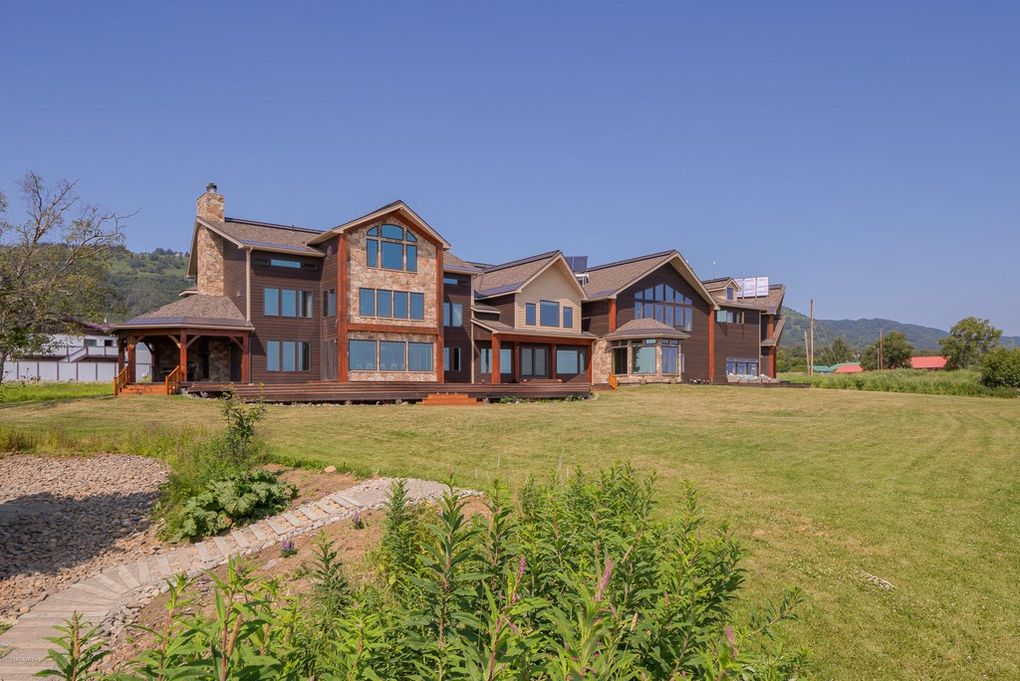
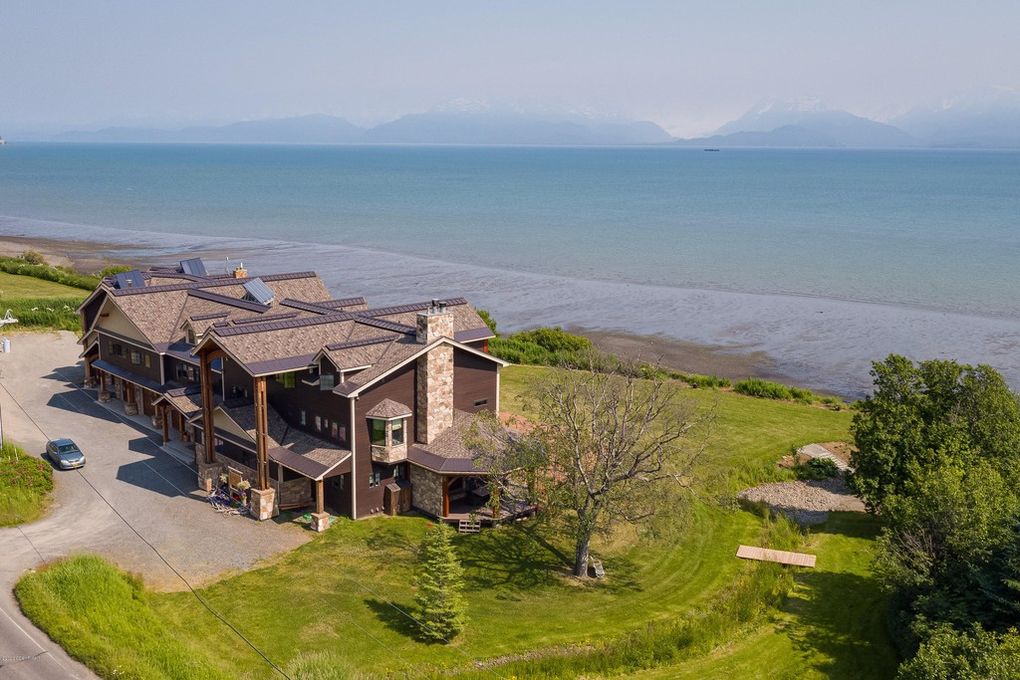
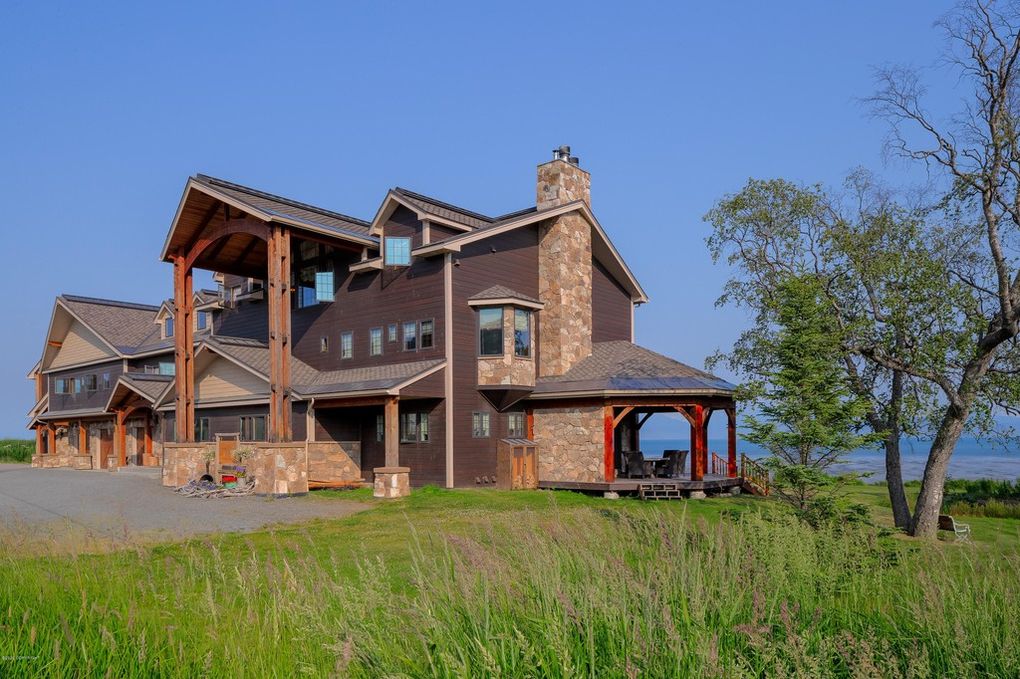
A mansion known as “Second Star” near Homer, AK, has just landed on the market as the state’s most expensive home. Listed at $9 million, it will set a state record if it sells at the current asking price.
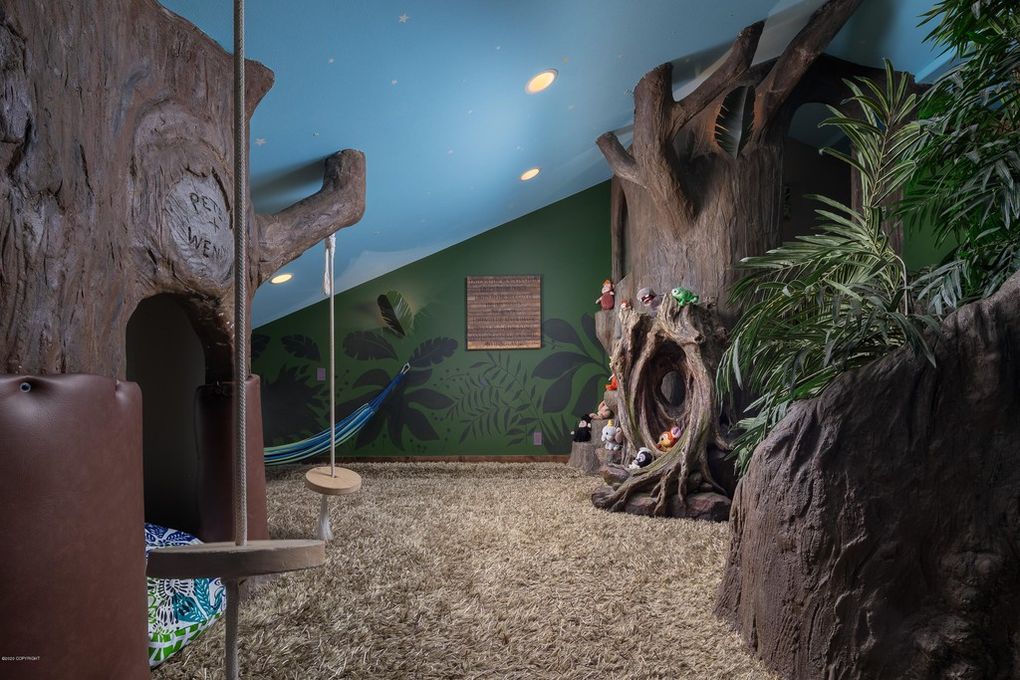
Named for the location of Neverland in the “Peter Pan” books, this Alaskan property is loaded with magical touches.
“This property is truly unlike really anything anywhere, but in Alaska specifically, it’s the crown jewel of real estate,” says the listing agent, Richelle Killian. “The owner built it with a vision: to have a truly luxurious vacation spot, because it’s something that Alaska lacks.”
If you’re curious about comps in the luxury real estate market way up north, the second most expensive listing in the 49th state is a $3.5 million home in Anchor Point. Suffice it to say, Second Star sits in another galaxy.
Built in 2011, on 2.5 acres on Kachemak Bay, the mansion measures in at 17,000 square feet. It features eight bedrooms that sleep up to 30 people, 12 bathrooms, plenty of entertaining space, and breathtaking views.
Exterior
Ryan Black
Exterior
Ryan Black
“When you’re looking out anywhere on the backside, you’re looking over Kachemak Bay and into the mountains,” Killian explains.
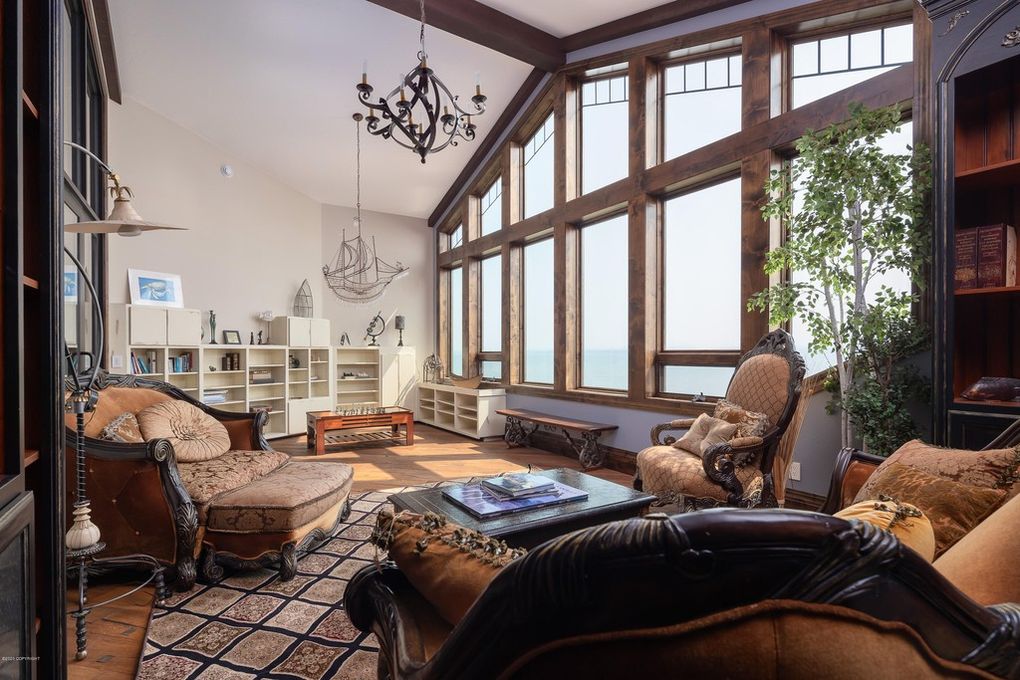
“So you’ve got ocean wildlife, you’ve got a viewing room with a telescope, where you can see bears in the mountains. You can see everything. You can see all the way down to the Homer Spit and see the boats coming in and out.”
Viewing room
Ryan Black
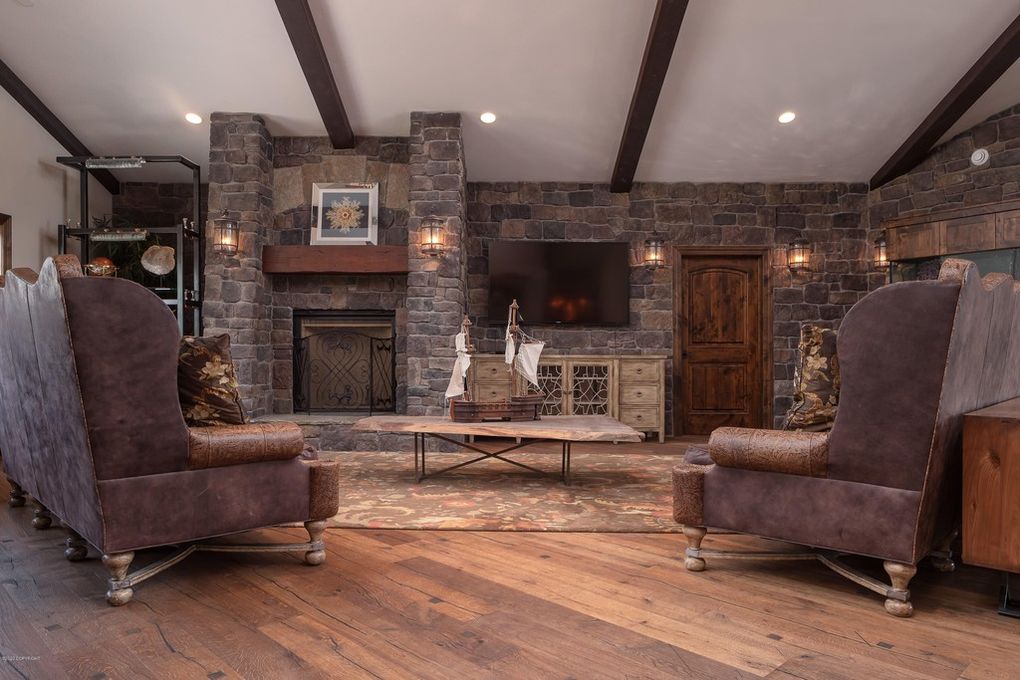
All the home’s high-end furnishings are included in the purchase price. The furniture alone, which is mostly custom-made or one of a kind, is estimated to be worth around $300,000. There’s an additional $250,000 in custom lighting, including several chandeliers.
Interior
Ryan Black
“It’s not overly fussy. [The owner] did it in such a way that it’s luxurious but it’s not unlivable,” Killian explains. “You feel like you can run through the property, you can have kids running around, they’re not going to break things. It truly is a functioning home.”
Interior
Ryan Black
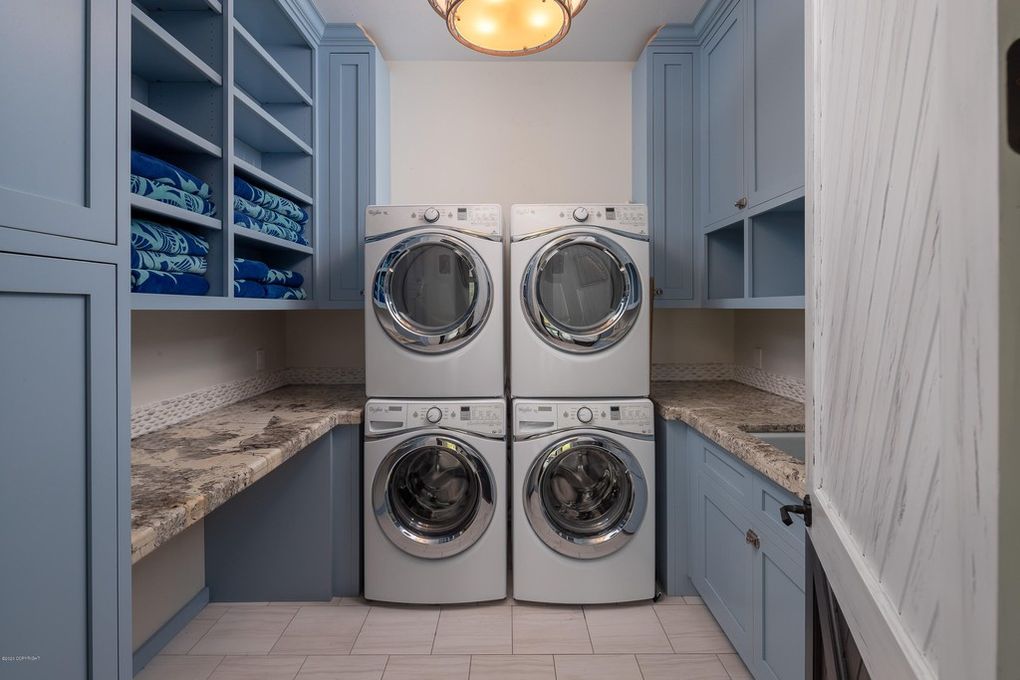
For a buyer expecting a posse of visitors, there are five sets of washers and dryers. The floors are all hardwood, with in-floor radiant heat. Solar panels provide most of the electricity, and there’s a six-car garage.
Laundry
Ryan Black
“It’s just breathtaking from top to bottom. There’s no corner that you turn that you just aren’t taken aback with something,” Killian says. “Whether it’s another custom chandelier, or just the detail in the wood floors, every single detail is just brilliant.”
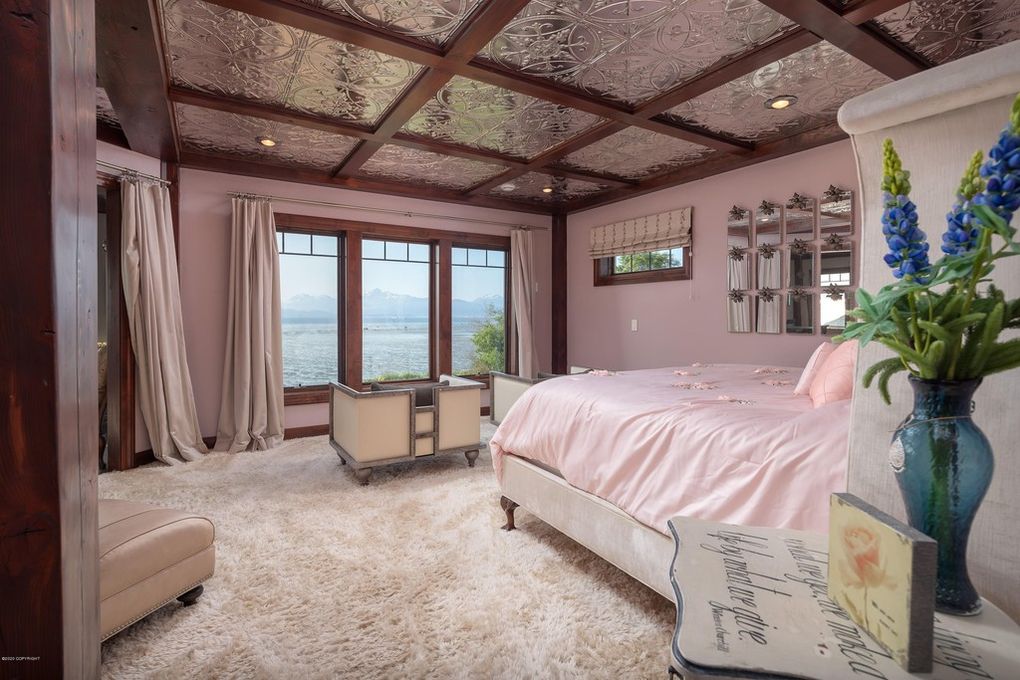
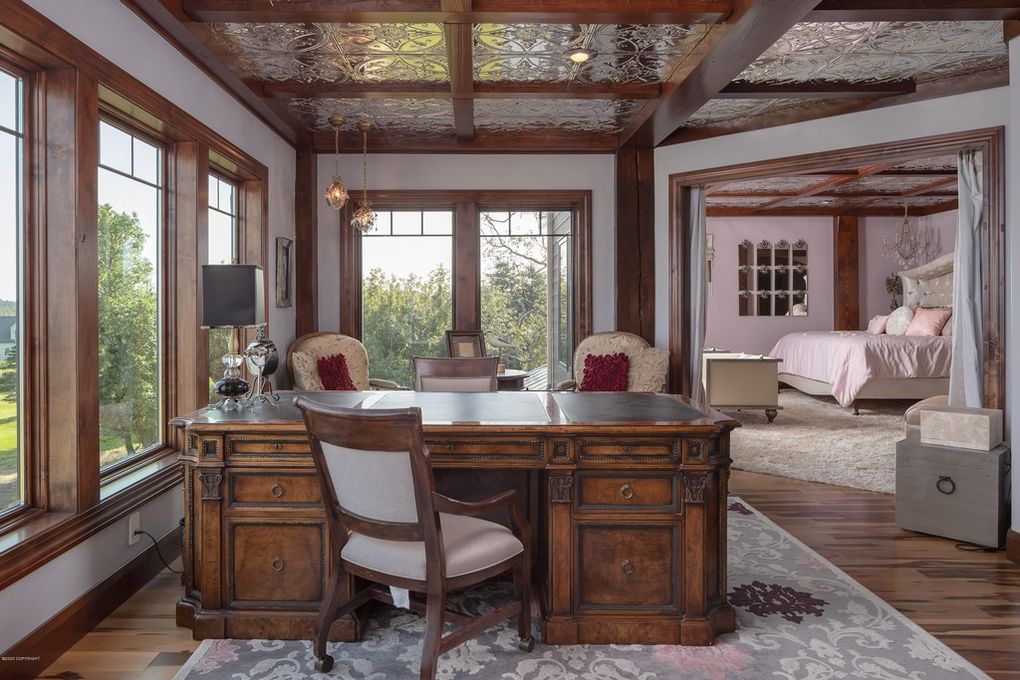
Each of the mansion’s eight bedroom suites is designed with a theme. The master suite has 14 chandeliers, a master bath with a marble shower, a private office space, and a walk-in closet.
Master bedroom
Ryan Black
Office off master bedroom
Ryan Black
Master bathroom
Ryan Black
There is also a nautical suite, designed to feel like a wooden ship, with treasure maps on the ceiling.
Nautical bedroom
Ryan Black
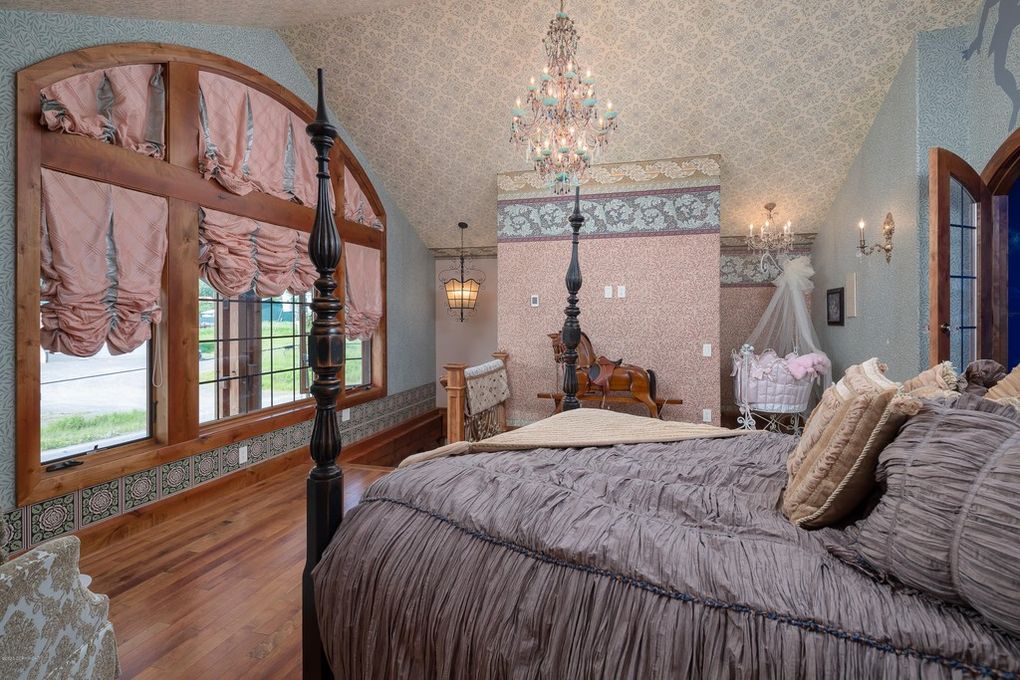
The “Darling” and “Neverland” suites are meant for kids—or a kid at heart. The bedroom was inspired by Wendy Darling’s room in “Peter Pan” and a door leads to Neverland.
“Darling” bedroom
Ryan Black
“Everything is so beautifully detailed—from the crocodiles, the boats, and the mermaids,” Killian says. “Then you’ve got these big clouds and the clouds have beds inside them. There’s a bed inside the ship. There are beds inside the trees. So you can have just the most amazing, magical experience for your children.”
“Neverland” suite
Ryan Black
“Neverland” suite
Ryan Black
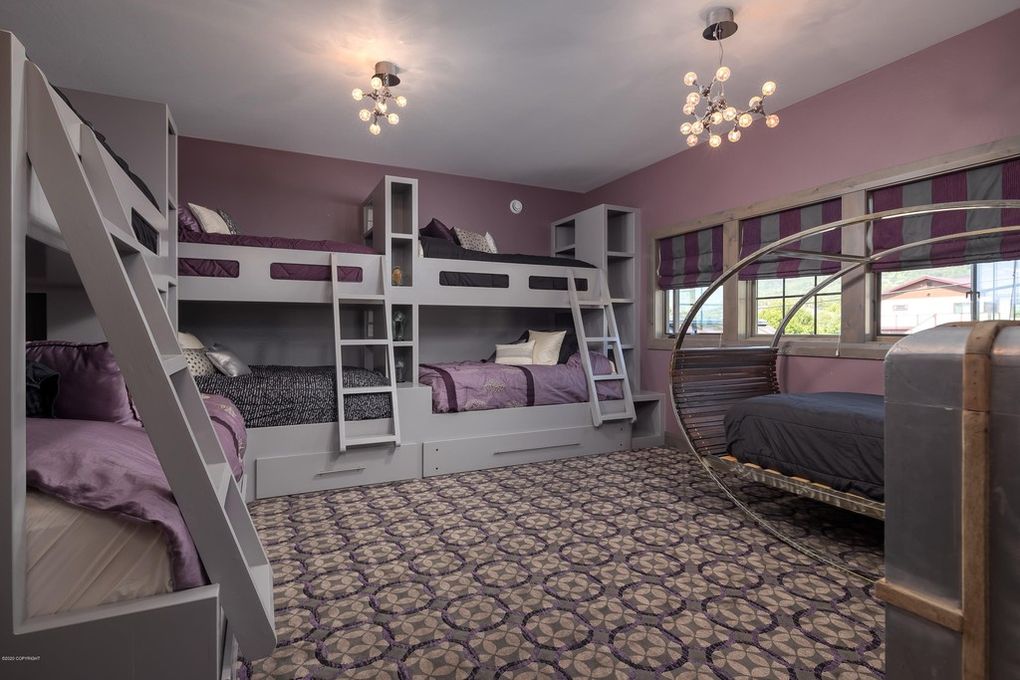
Then there’s the “Slumber Party” suite, which sleeps 12 and comes equipped with a unique and modern feature.
“Every one of those bunks has a USB plugin for charging a phone,” Killian says. “How perfect is that for a group of teenagers?”
“Slumber Party” room
Ryan Black
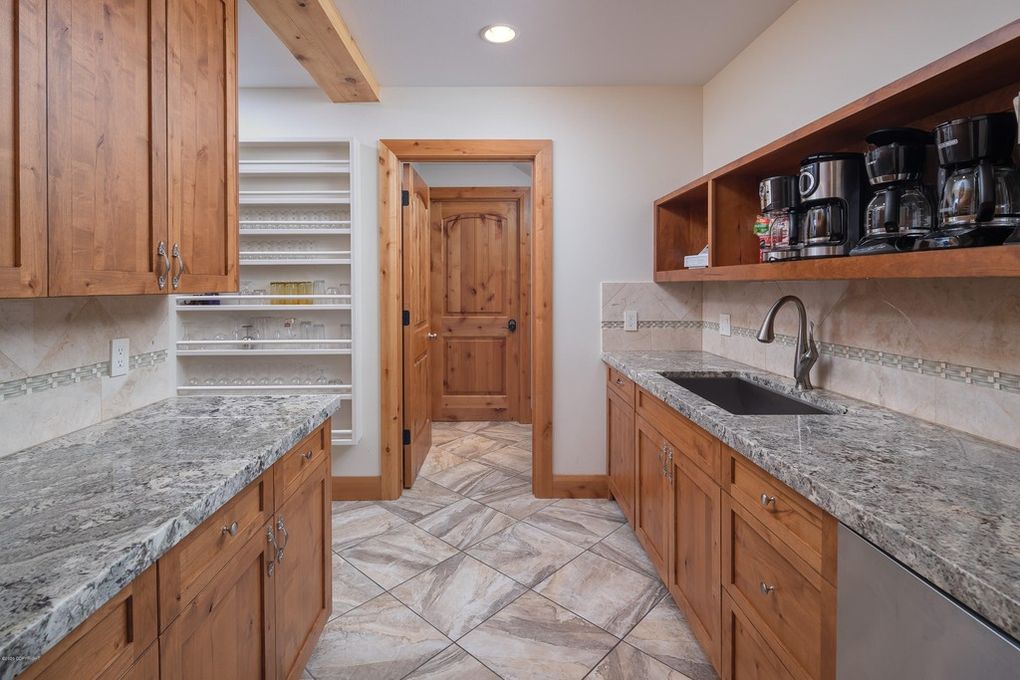
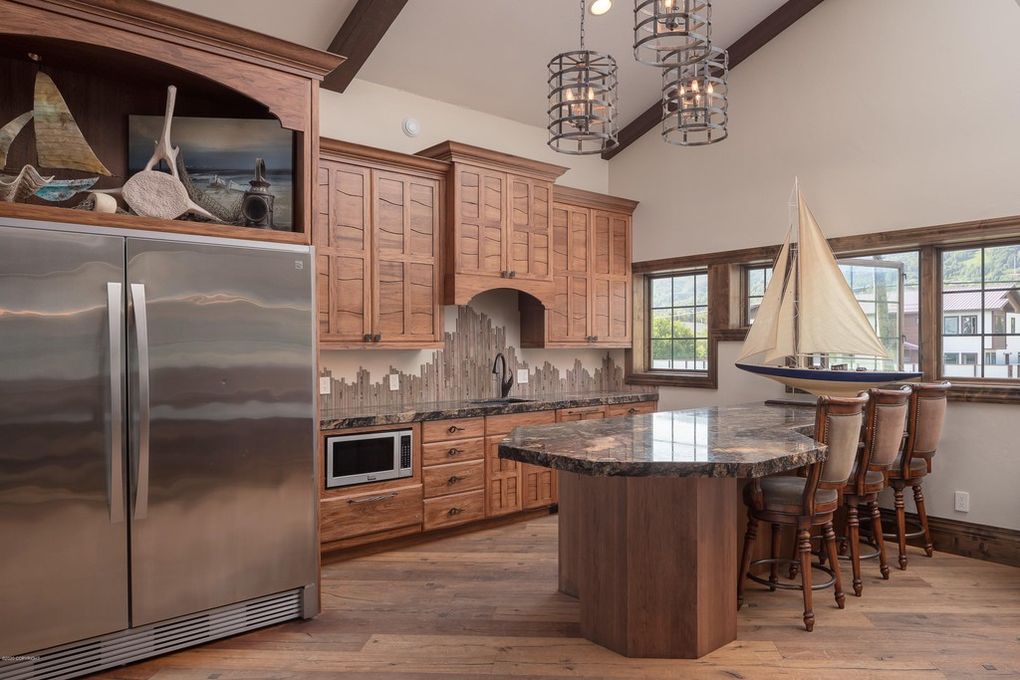
According to the agent, the home’s entire layout encourages togetherness. There are two kitchens, one with a hidden scullery to hide preparation space, a dishwasher, washer and dryer, and the pantry.
The main kitchen can seat 30 people for meals and has high-end finishes and appliances. Upstairs, near the game room, is a secondary kitchen for entertaining.
Kitchen
Ryan Black
Scullery area
Ryan Black
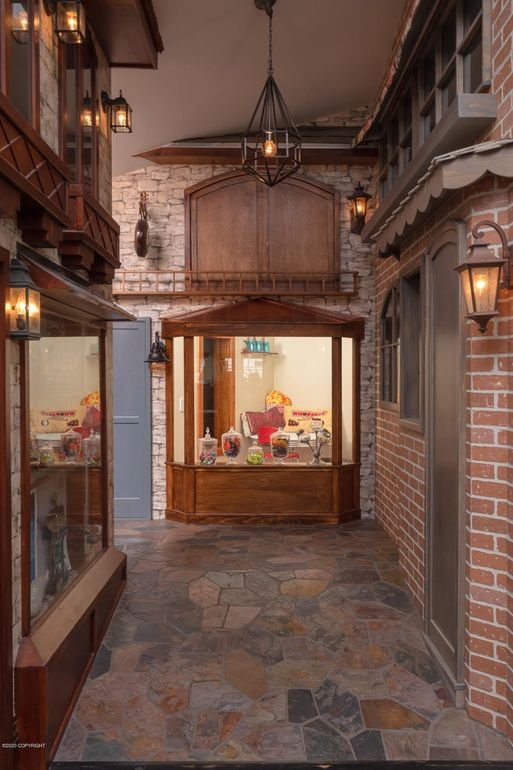
There are very few televisions in the house, but there is a 30-seat movie theater for group viewings. The hallway leading from the library to the movie theater is set up like a market in Paris, with storefronts to explore.
Theater
Ryan Black
“Parisian Market”
Ryan Black
“It’s super cool, because there’s all sorts of little hidden niches. When you first walk down the hallway, you can see a window of a candy shop. But there are two hidden entrances for kids to find, to actually get inside that candy shop and get to the candy,” Killian notes.
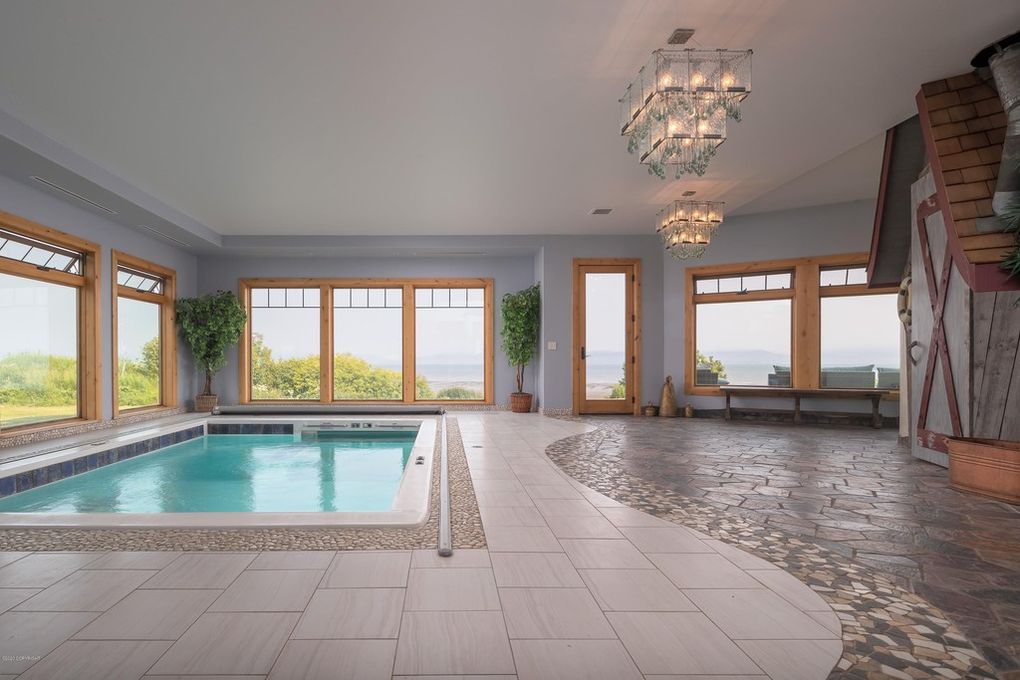
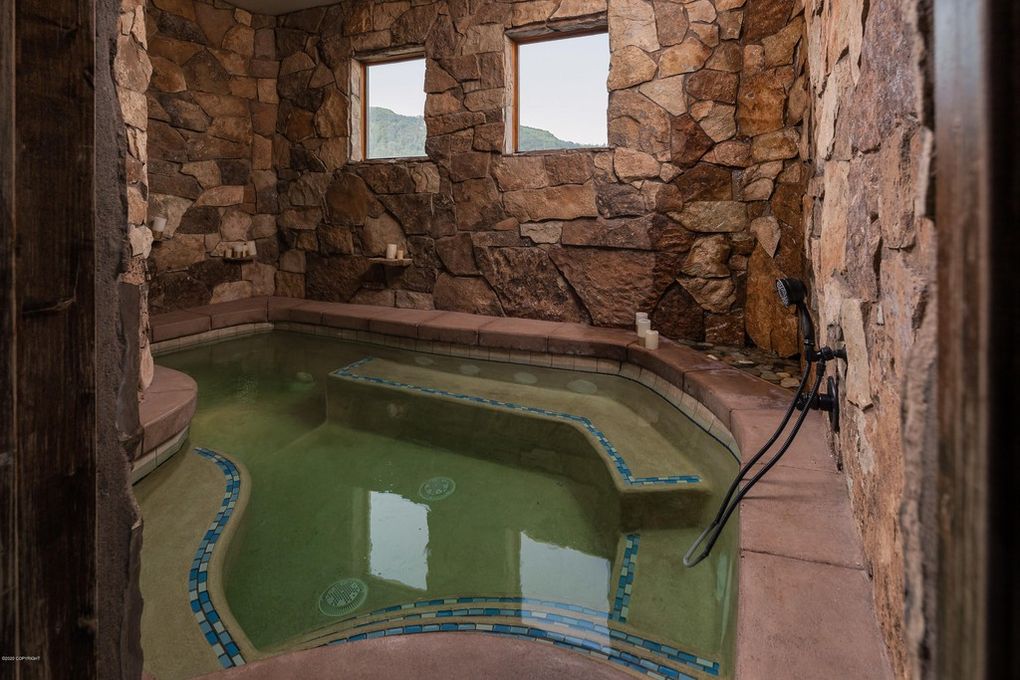
For even more diversion, a luxury spa area features an indoor pool with a treadmill inside it, a Turkish bath, sauna, and massage room.
Pool
Ryan Black
Currently, the home is available for rent by the night. Rates start at $3,500, and the home is often completely booked for a year in advance.
“It has been the No. 1 wedding destination in Alaska for several years in a row now,” Killian says. “I mean it’s perfect. It’s right on the ocean, it sleeps 30 people. You can have your entire wedding party there for a week, and have everything right on site.”
The property is about a three-hour drive from the Anchorage airport and close to the small Homer airport.
The town of Homer is south of the state capital on the Kenai Peninsula. Around 5,800 hardy souls call the place home, and in the summer months, the average temperatures seldom exceed 70°F.
Killian says some actors and musicians have expressed an interest in taking a look at the property as a vacation home, but there may be another kind of buyer.
She says a potential buyer with cash to spare might simply be looking for “a second home to completely get away.”
Meanwhile, she adds, someone “who could see the potential in the rental side of it and maintaining it as a luxury rental, is also a strong possibility.”
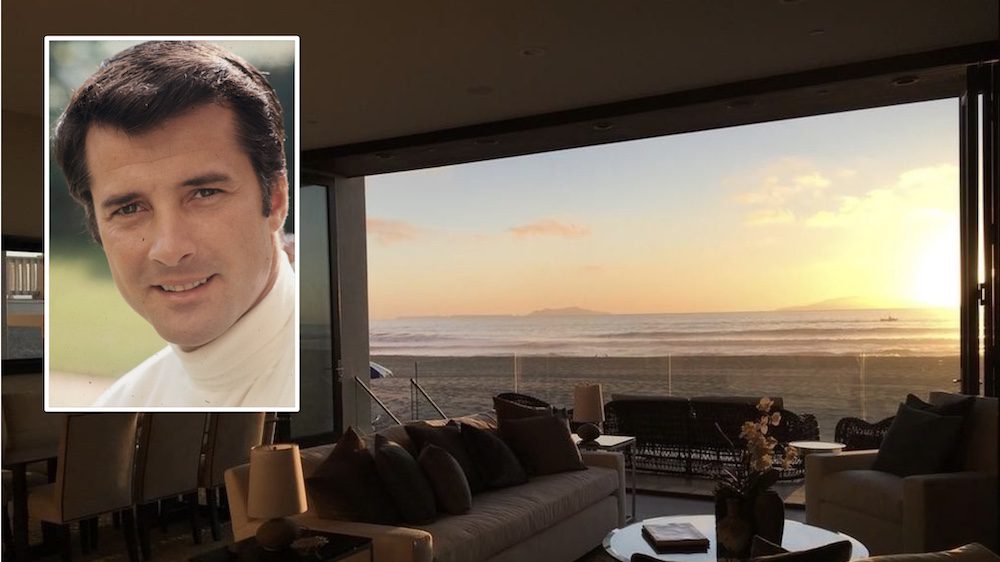
The Oxnard, CA, home of the late actor Lyle Waggoner went on the market in mid-June for $4.4 million. The television star passed away in March at the age of 84.
Public records indicate that Waggoner—perhaps most famous for his stint in sketches on the “Carol Burnett Show”—bought the house in 2016 for $3.95 million, after the completion of an extensive remodel and rebuild.
Located right on Mandalay Beach, the spacious 4,644-square-foot home would probably command more than twice the listed price if it were located just 30 miles south, in Malibu.
Since it is farther up the coast, in Ventura County, the property affords more privacy, as well as easy access to Hollywood Beach, the Channel Islands Harbor, and the foothills of the Ventura coast.
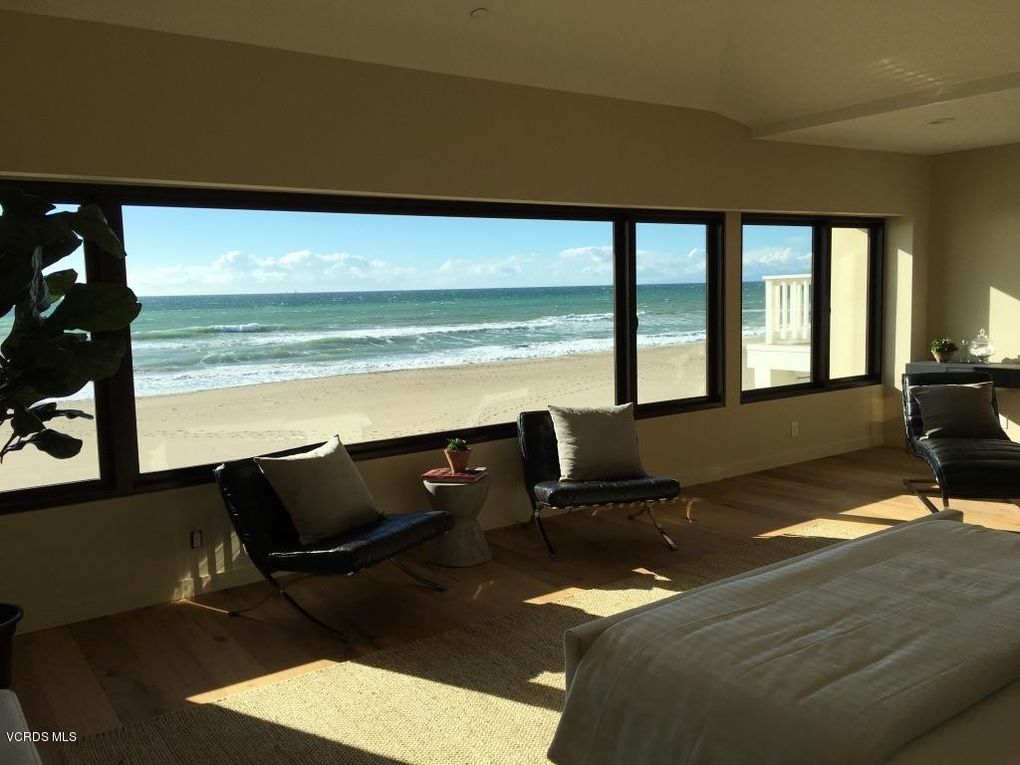
The stylish, modern five-bedroom home was built in 2015, and offers direct access to the sandy beach. It has high ceilings, massive windows, large bi-fold glass doors, and generous decks for taking full advantage of the coastline views.
Luxe amenities include an elevator, game room, and a six-car garage. There are also three separate HVAC systems, so that the home does not need to be fully air conditioned if only a part of it is being occupied.
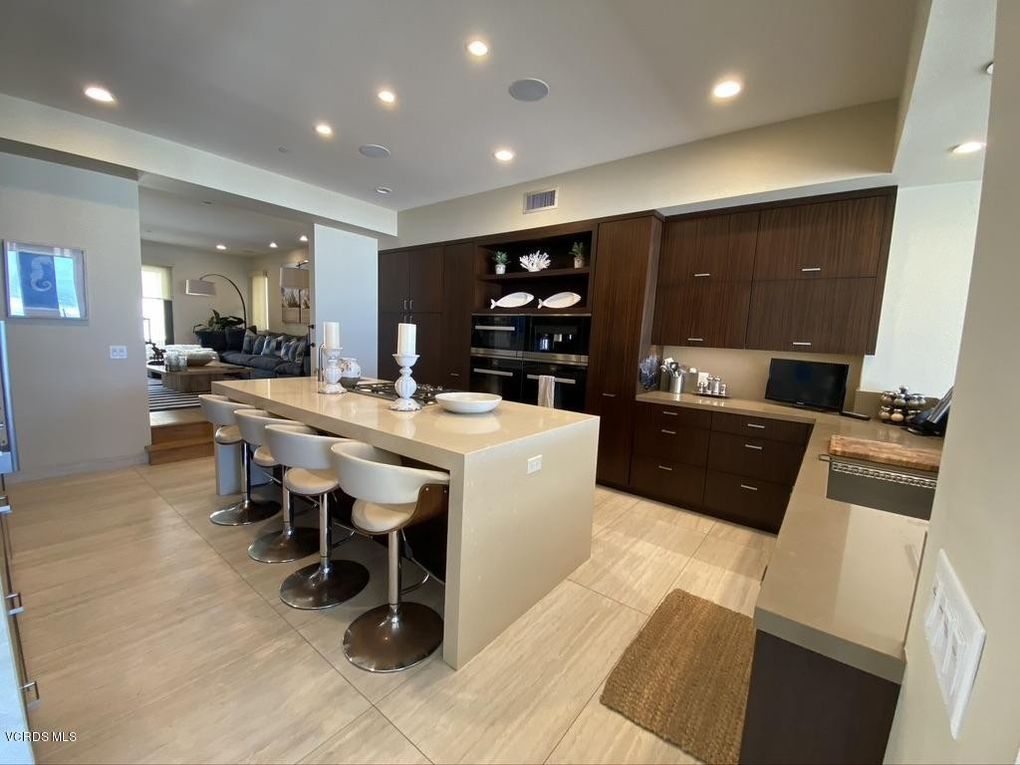
The kitchen is a modern dream, with a waterfall-edged island, quartz countertops, custom cabinetry, and Miele appliances. It offers a lovely view of the ocean.
Great room of Lyle Waggoner’s beach house in Oxnard, CA
realtor.com
Master bedroom
realtor.com
Sunset view
realtor.com
Elevator and staircase
realtor.com
Kitchen
realtor.com
Waggoner appeared in “Gunsmoke” before he was cast as the host and a regular comedy sketch cast member on the “Carol Burnett Show.” He went on to star on TV’s “Wonder Woman” and featured as a guest star on a number of popular shows.
He went on to create a company that provided a home away from home for stars during film and television productions.
Star Waggons leased to the entertainment industry customized location trailers that can still be seen around Los Angeles during high-profile film shoots. Waggoner also became an accomplished sculptor.